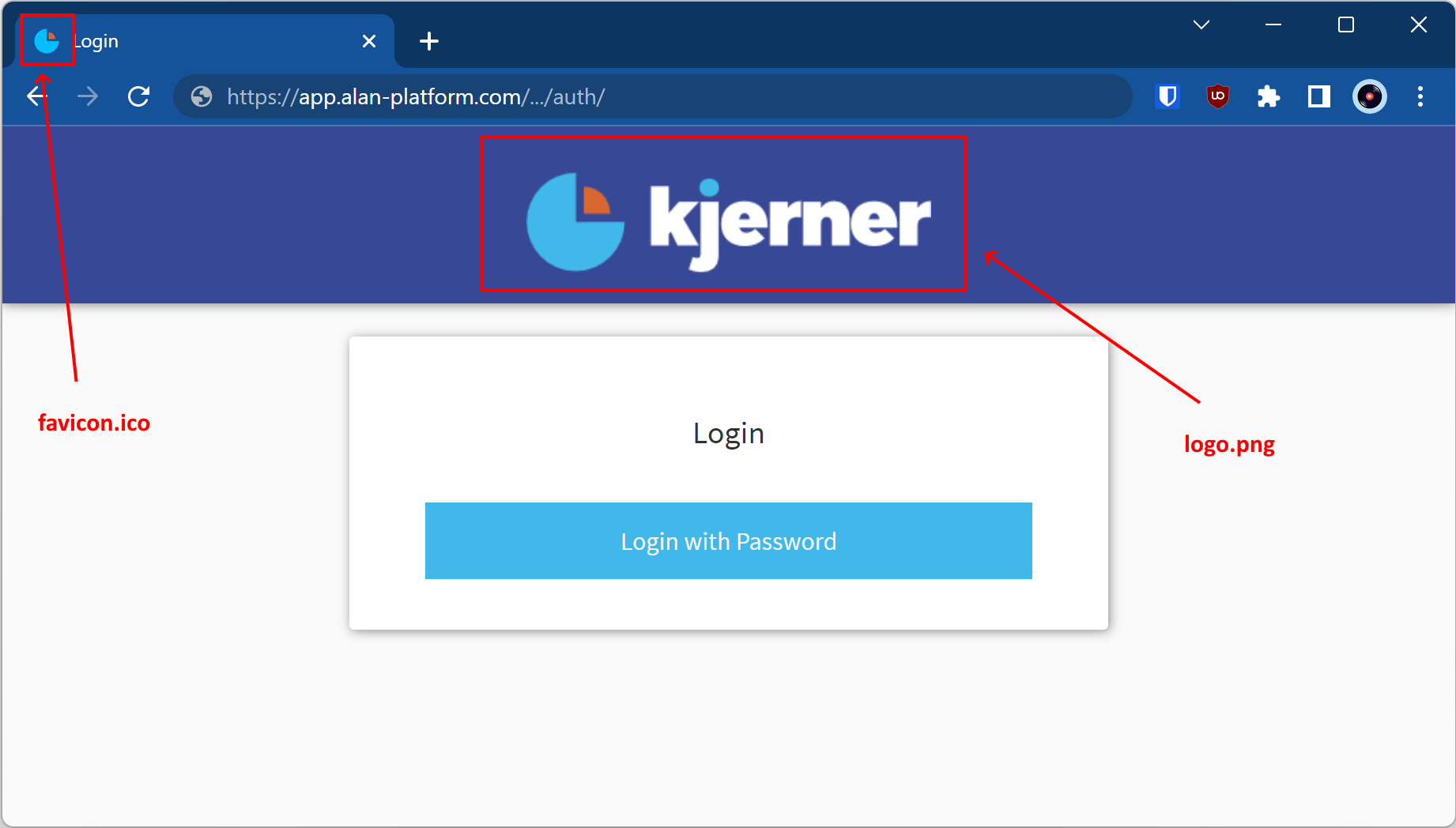
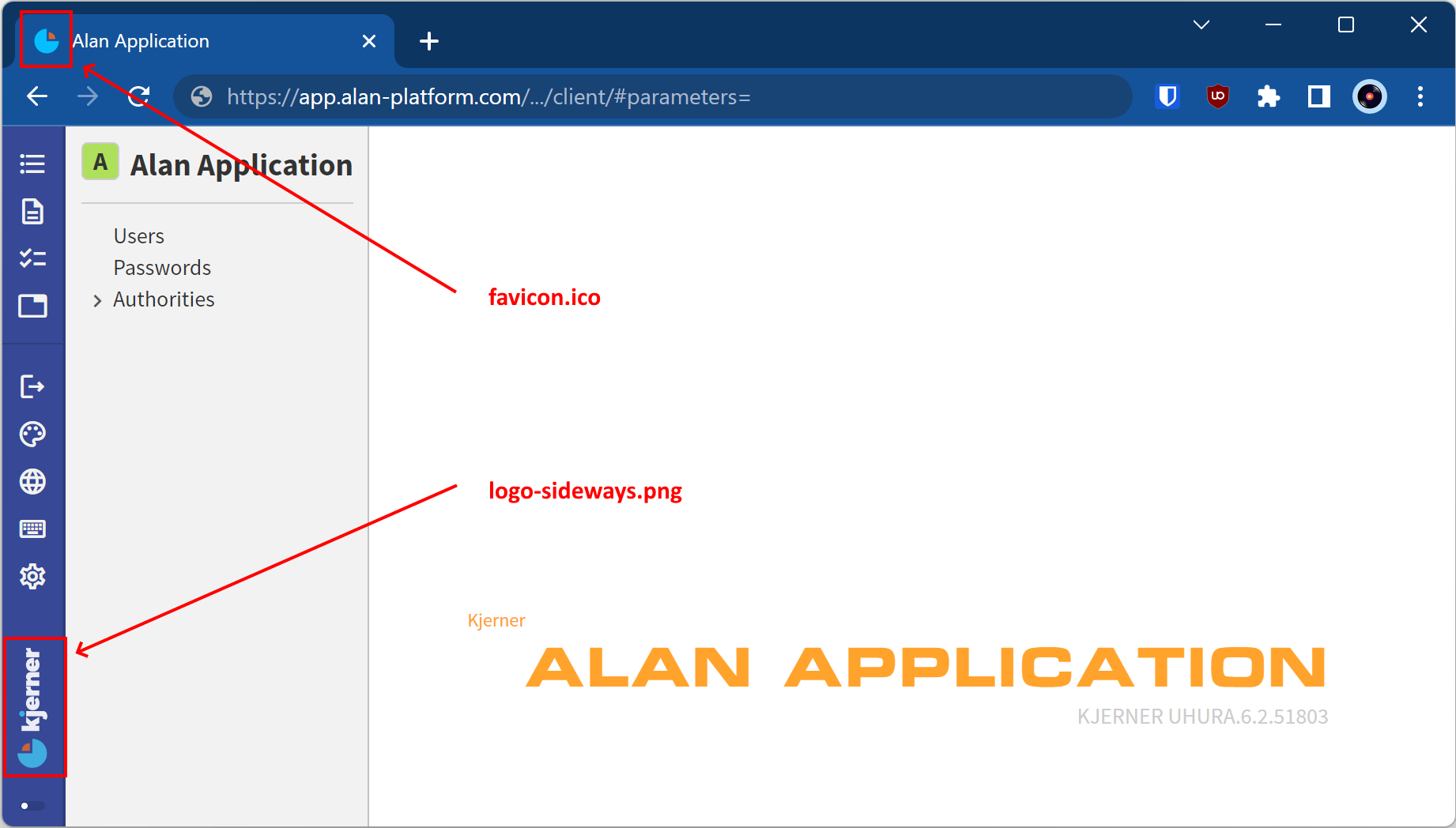
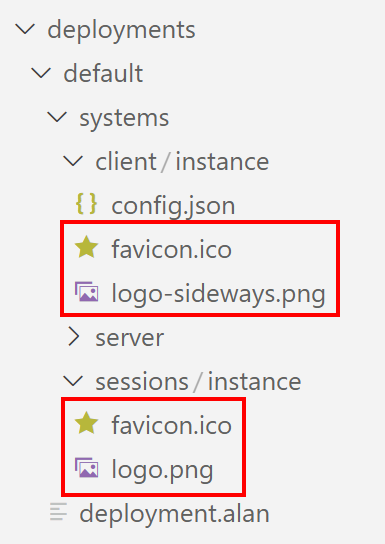
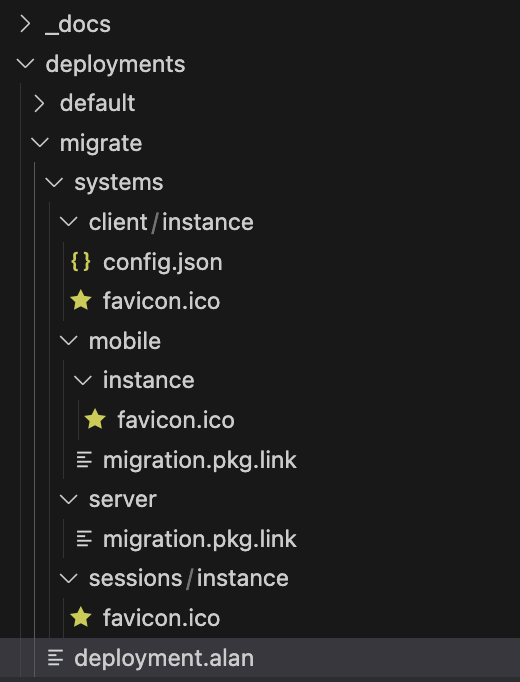
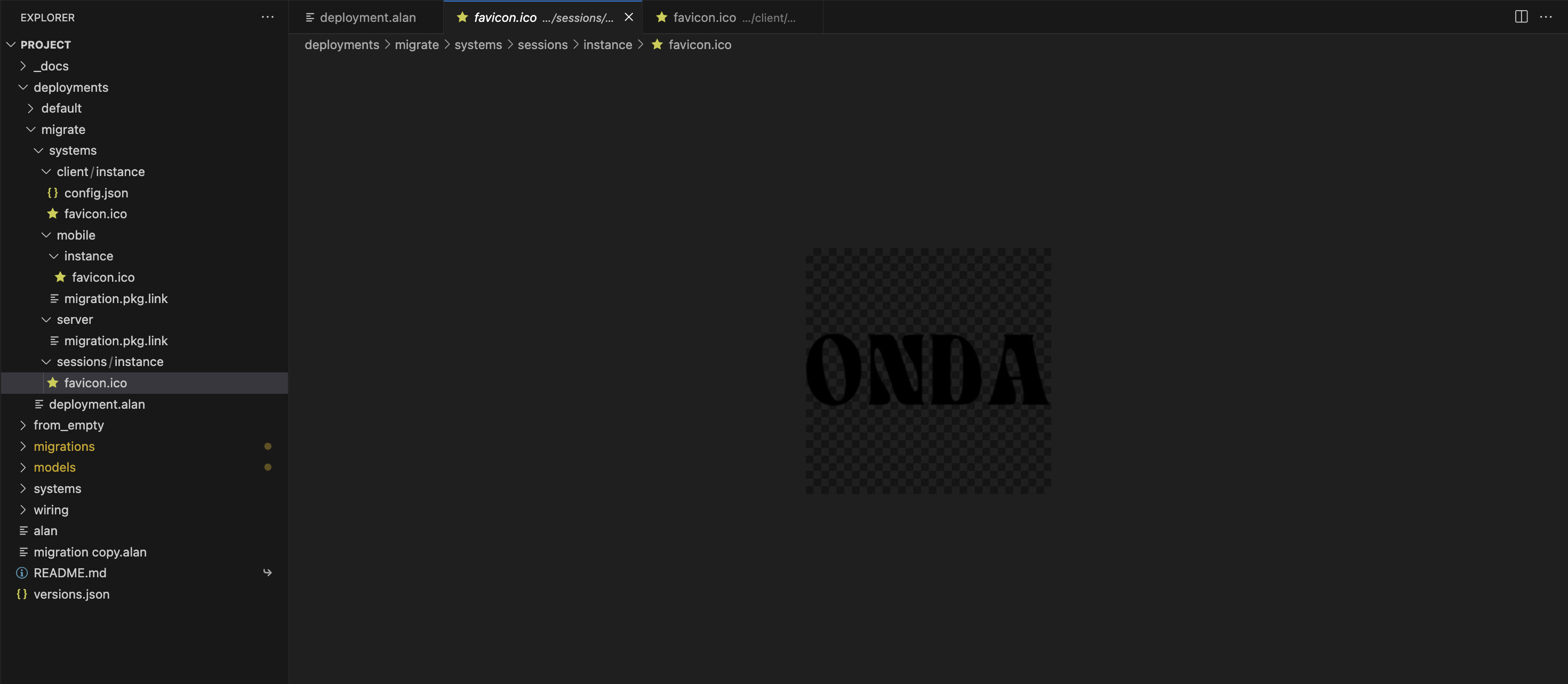
You can choose a favicon.ico for the tab icon and a logo-sideways.png that will be shown in the sidebar. This is instance data for a auto-webclient system.
In all cases, these files should be placed in the appropriate system directory in your deployment directory structure. An example for the online IDE project:
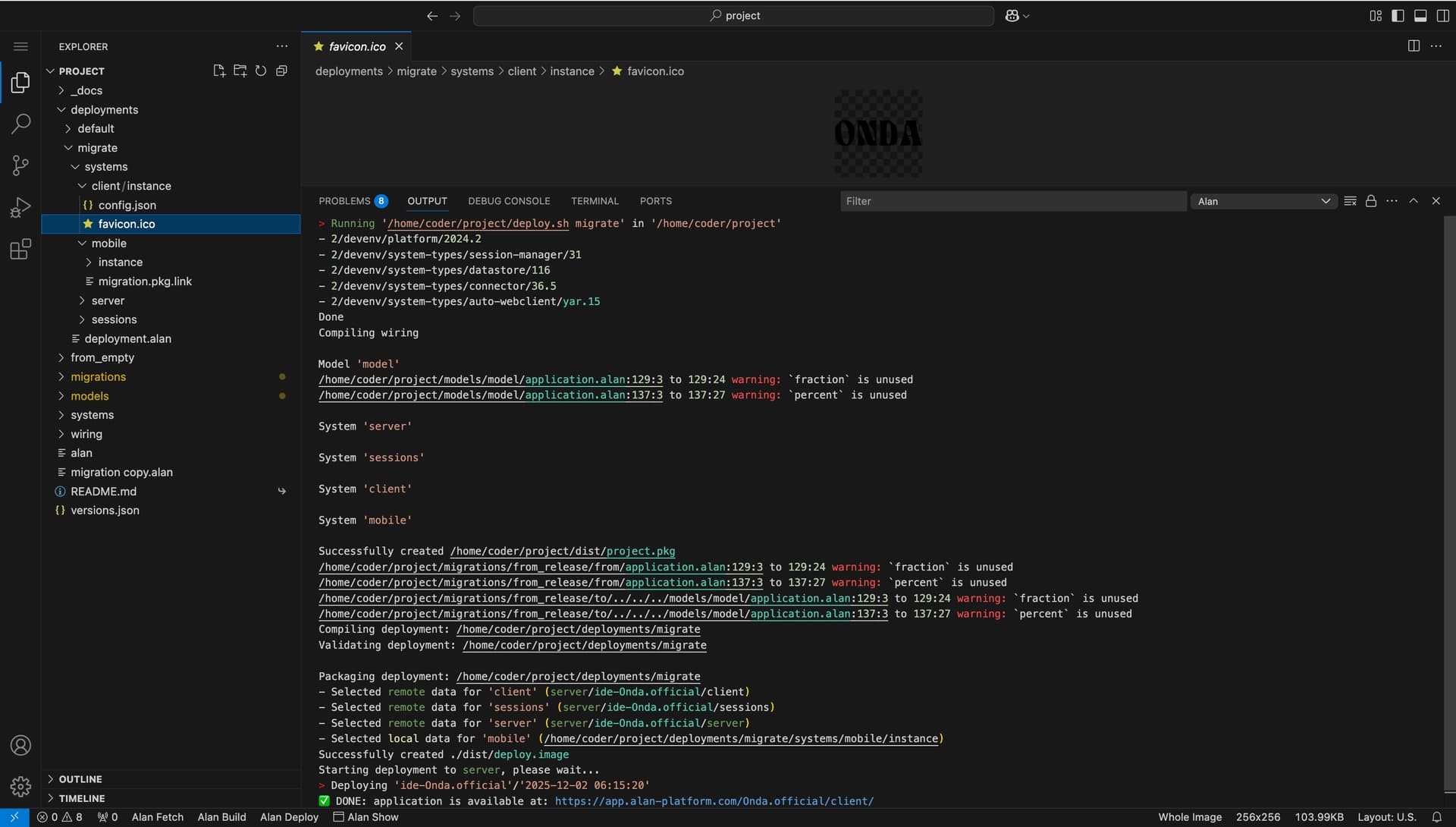
For a hobby project I am trying to change the Icon. As you can see, the favicon.ico is different from the Kjerner logo, however, when deploying with from migration, it does not show up.
The first one is used for new deployments without migrating existing application data. The second one is used for deployment with migration.
Both files specify how the data for the client system should be provided during deployment.
In deployments/default/deployment.alan:
systems
	'client'
		configuration: 'default'
			'timezone' = "Europe/Amsterdam"
		instance-data: local
In deployments/migrate/deployment.alan:
systems
	'client'
		configuration: 'default'
			'timezone' = "Europe/Amsterdam"
		instance-data: from 'server'/"ide-YOURNAME"/"client"
The last line with the instance-data specifies the source of the data for the client system, which includes the favicon.ico file.
instance-data: local means: use the provided data/files from the local directory in the (online IDE) project.
instance-data: from ... means: use the data from an existing system in the active version of the application.
So if you want to use your locally provided favicon.ico during deployments with migration, you should use instance-data: local for the client system in your deployments/migrate/deployment.alan file.
This turned out to have been a browser caching issue after further investigation. So for anyone who does not see their new/updated icons, please check in another browser and/or a private window.
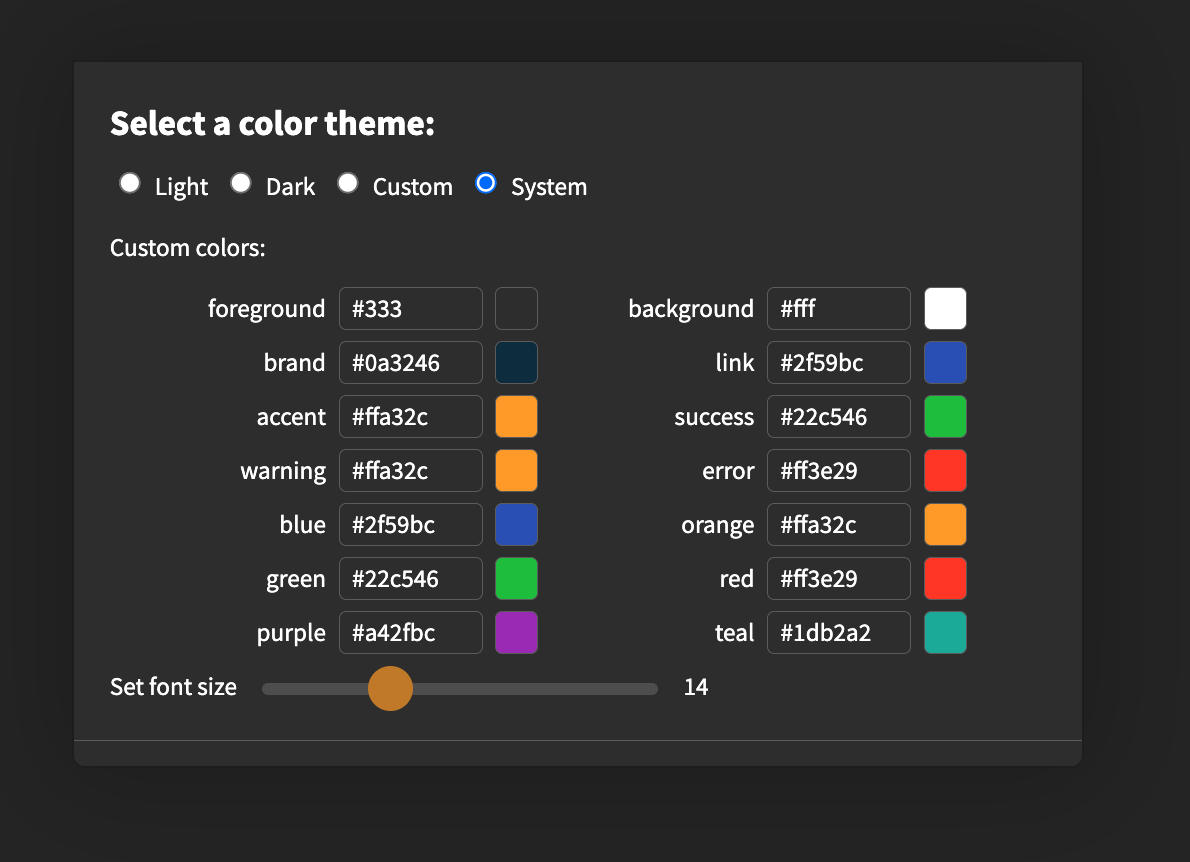
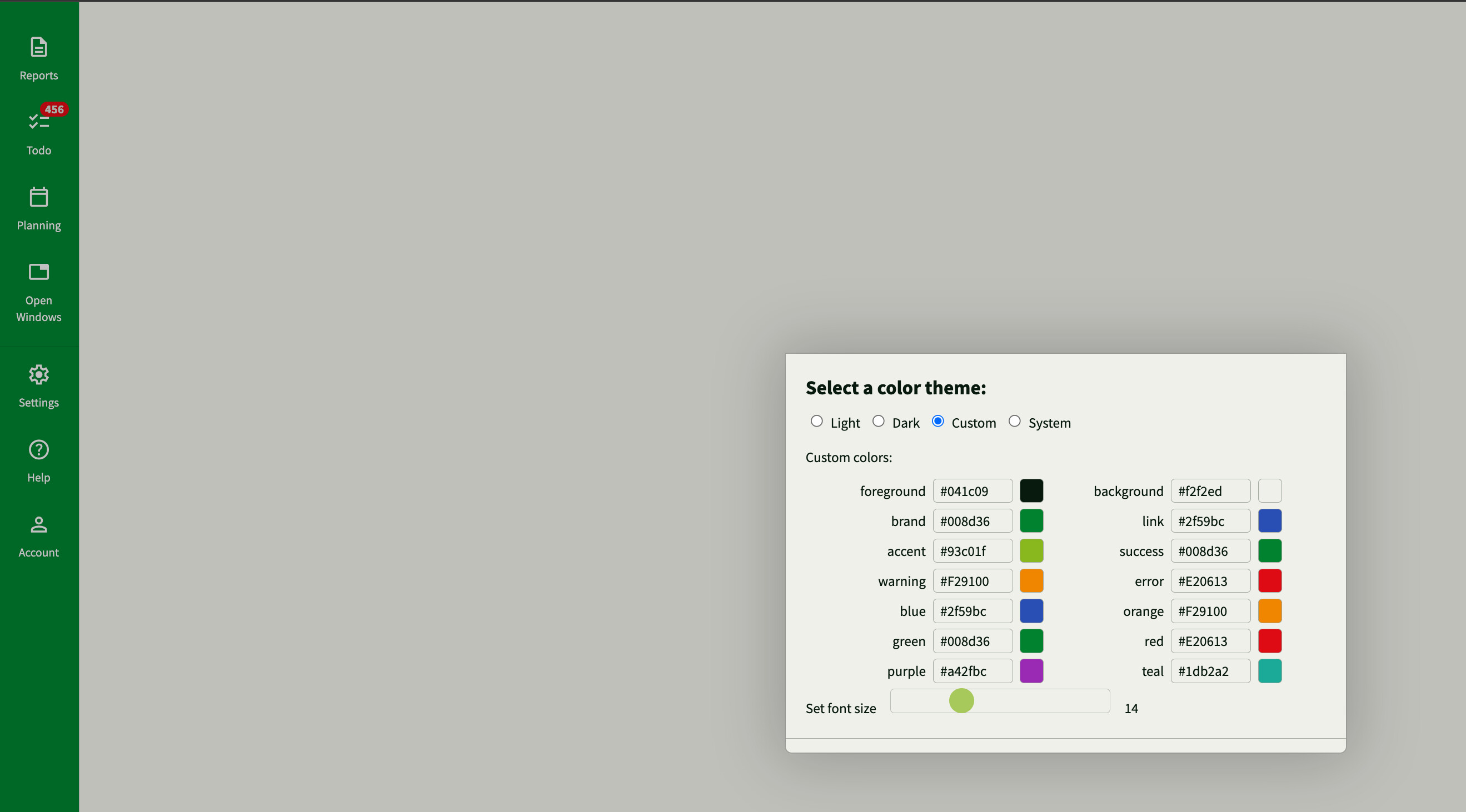
You can change the colors in the settings.alan of the client system. See the documentation and search for “custom color theme”.
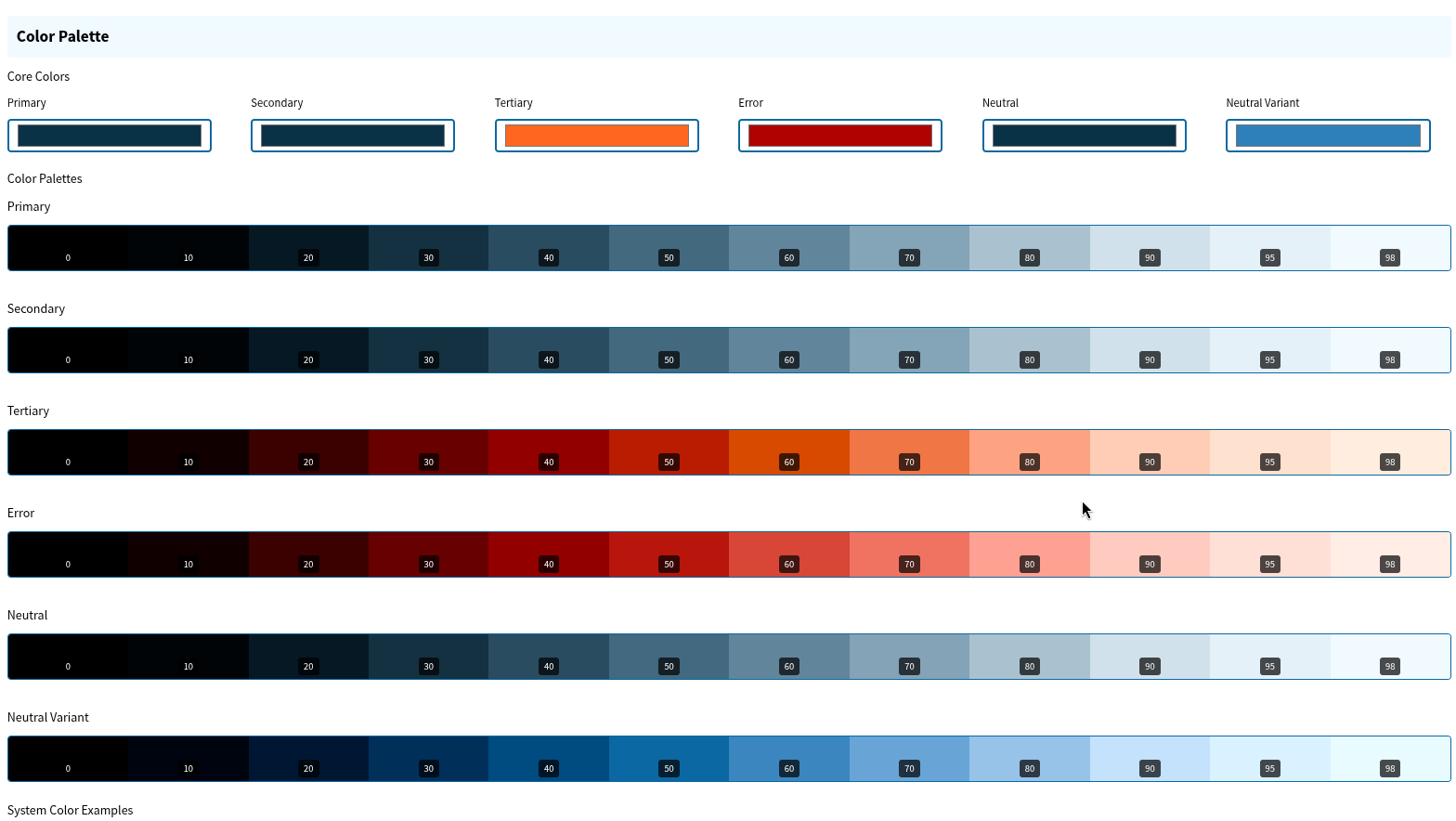
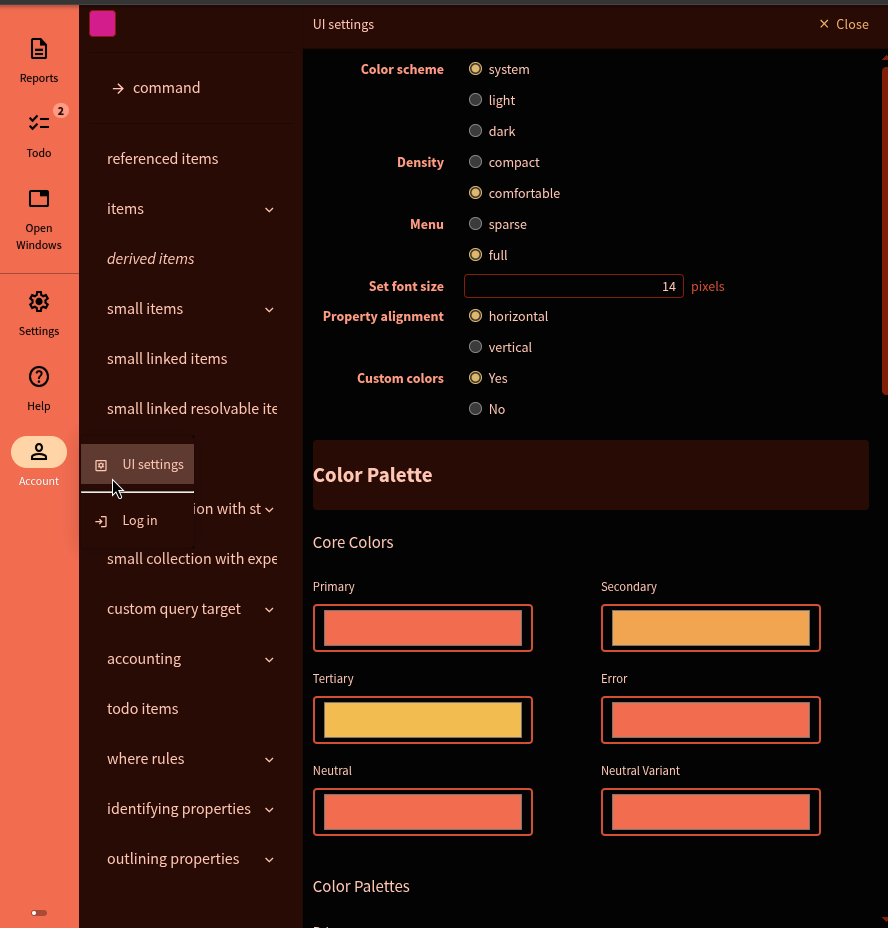
Please note that this will soon change in future versions. We’ve implemented a dynamic color scheme based on some base colors. Preview:
Considering yar.20, is it still possible to pre-set custom colours on deployment?
Currently our ERP, in yar.15, uses custom colours based on our company colour palette. I would like these colours to be maintained for all users when updating to yar.20, if possible.
You can still set custom colors, but it works a little different than the previous version. Instead of settings colors in settins.alan, you have to add a section in annotations.alan.
To maintain good contrast throughout the application you can only choose base color from where a color palette is derived.